
Underground Fencing vs. Above-Ground Chain-Link Fencing: Key Differences, Benefits, and Best Uses
Fencing plays an important role in protecting properties, controlling access, and defining boundaries. Two different approaches are underground fencing and above-ground chain-link fencing. Although both can help manage property boundaries, they serve different purposes and have different installation requirements.
What Is Underground Fencing?
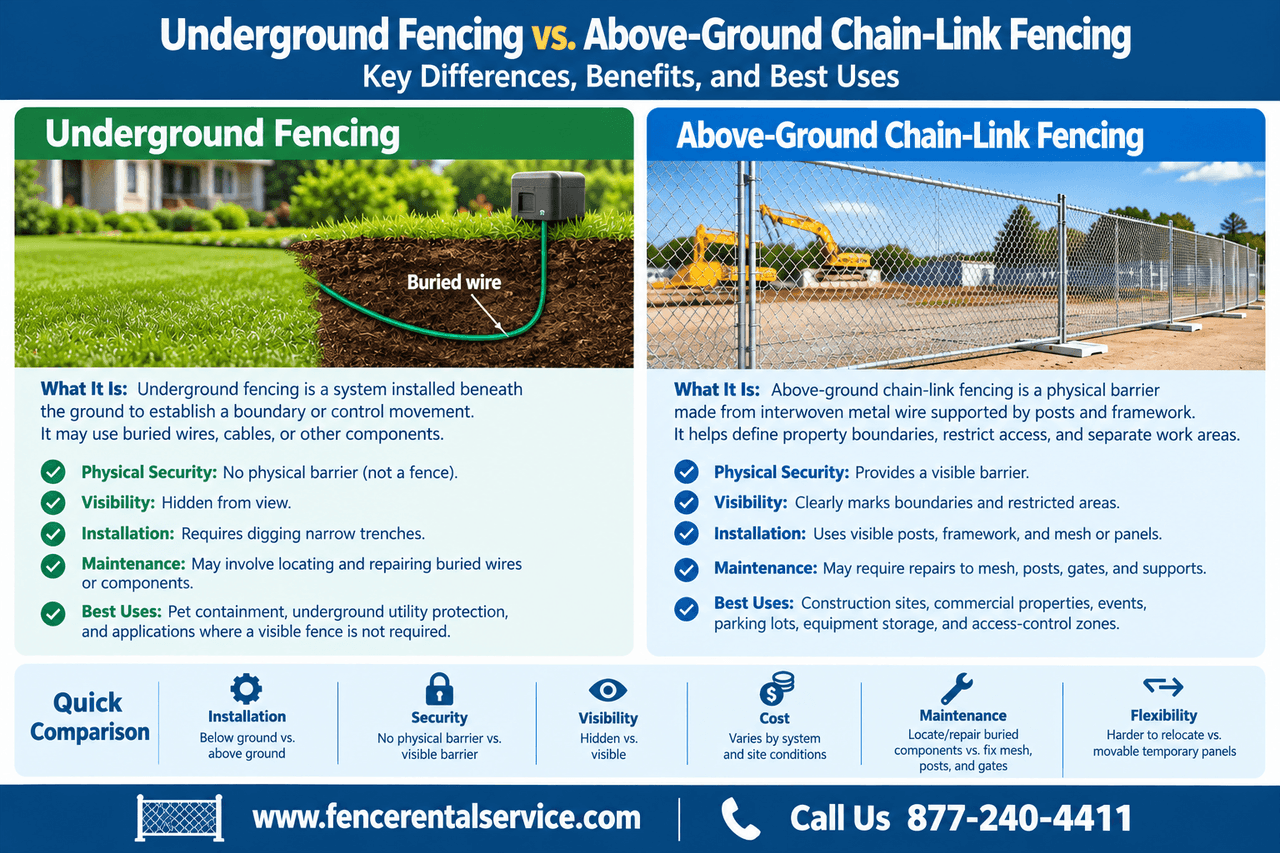
Underground fencing is a system installed beneath the ground to establish a boundary or control movement. Depending on its design, it may use buried wires, cables, or other underground components. For example, an electronic pet containment system uses a buried wire to create a boundary that communicates with a compatible receiver collar.
Underground fencing is generally not a physical barrier. It does not prevent people, animals, or vehicles from physically entering a property. Installation may require digging narrow trenches, and maintenance can involve locating and repairing buried wires or damaged components.
Best uses: Electronic pet containment, underground utility protection systems, and applications where a visible fence is not required.
What Is Above-Ground Chain-Link Fencing?
Above-ground chain-link fencing is a physical barrier made from interwoven metal wire supported by posts and framework. The fence is visible and helps define property boundaries, restrict access, and separate work areas.
Chain-link fencing is commonly used at construction sites, commercial properties, residential properties, parking lots, and outdoor events. Permanent installations typically use posts secured in the ground, while temporary chain-link fence panels may be supported by movable bases or other approved support systems.
Unlike underground fencing, chain-link fencing provides a physical obstacle. However, its effectiveness depends on the fence height, installation quality, gate arrangements, and overall site security requirements.
Best uses: Construction sites, temporary event boundaries, commercial properties, equipment storage areas, and access-control zones.
Key Differences Between Underground and Above-Ground Fencing
1. Installation: Underground fencing requires components to be placed below the surface. Above-ground chain-link fencing uses visible posts, framework, and mesh or freestanding panels.
2. Physical security: Underground electronic fencing does not create a physical barrier. Chain-link fencing provides a visible barrier that can help restrict unauthorized access.
3. Visibility: Underground fencing is largely hidden from view. Chain-link fencing clearly marks boundaries and helps people identify restricted areas.
4. Installation costs: Underground fencing costs depend on the system, soil conditions, and excavation requirements. Chain-link fencing costs depend on fence length, height, materials, labor, and whether the installation is permanent or temporary.
5. Maintenance: Underground systems may require troubleshooting buried wiring or electronic components. Chain-link fencing may require repairs to mesh, posts, gates, and supports.
6. Flexibility: Underground fencing is generally less convenient to relocate after installation. Temporary chain-link fence panels can be moved and rearranged to accommodate changing site layouts.
Which Type of Fencing Is Better?
The right choice depends on the intended purpose. Underground fencing may be appropriate when an invisible boundary is desired, particularly for certain pet containment applications. However, it should not be considered a substitute for a physical security fence.
Above-ground chain-link fencing is generally more suitable when a visible barrier is needed to protect equipment, organize a construction site, establish event boundaries, or control access to a property.
For temporary projects, freestanding chain-link fence panels can provide flexibility without requiring the same type of permanent post installation. Before installing any fence, it is important to check underground utility locations and consider local regulations, ground conditions, and site-specific safety requirements.
Summary:
Underground fencing and above-ground chain-link fencing serve different functions. Underground systems establish hidden boundaries, while chain-link fencing provides a visible physical barrier. Understanding their differences in security, installation, cost, maintenance, and flexibility helps property owners, contractors, and event organizers select an appropriate fencing solution for their needs.