
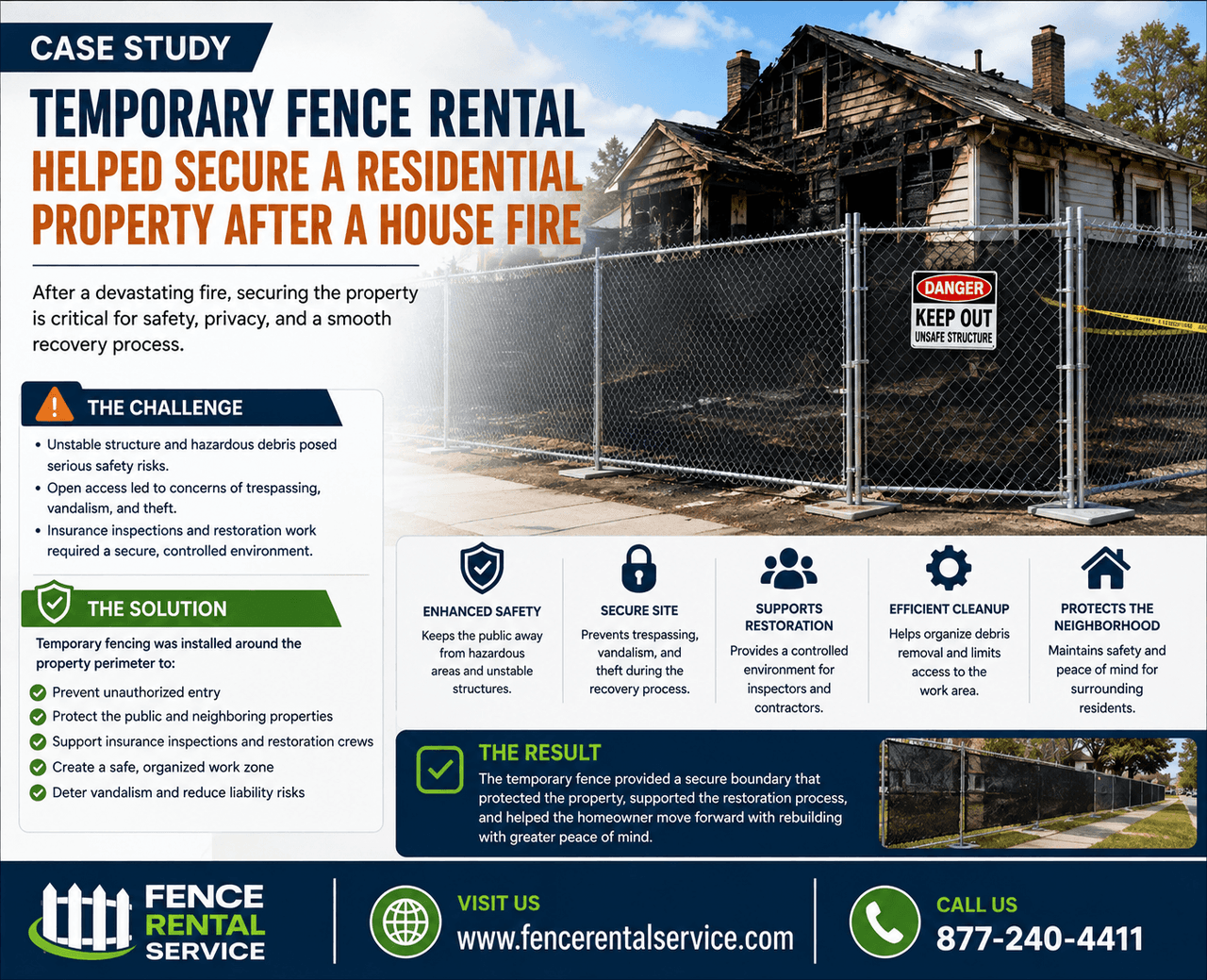
Case Study: Introduction
House fires can leave residential properties unsafe and vulnerable long after the flames have been extinguished. In addition to structural damage, burned homes may contain unstable walls, exposed debris, damaged utilities, and hazardous materials that pose risks to homeowners, neighbors, emergency personnel, and the public.
One of the first priorities after a fire is securing the property to prevent unauthorized access while allowing insurance representatives, investigators, contractors, and cleanup crews to carry out their work safely. This case study examines how temporary fencing helped protect a fire-damaged residential property during the recovery process.
Background
A single-family home experienced a significant fire that caused extensive damage to the roof, interior living spaces, and portions of the exterior walls. Although firefighters successfully contained the blaze, the structure was declared unsafe for occupancy until inspections and repairs could be completed.
Following the emergency response, the property contained numerous hazards, including burned debris, broken windows, unstable building materials, exposed nails, and damaged sections of fencing. The homeowners temporarily relocated while insurance assessments and restoration planning began.
With the property left vacant, securing the site became an immediate concern.
Challenges Following the Fire
The damaged residence presented several safety and security challenges:
Open access through damaged entry points
Structural instability in certain areas
Debris scattered throughout the property
Potential injury risks for children and pedestrians
Exposure to weather and falling materials
Limited visibility around hazardous areas
Ongoing inspections by fire officials and insurance representatives
Without a physical barrier, the site remained vulnerable to unauthorized entry and accidental access.
Selecting a Temporary Fencing Solution
Property managers and restoration professionals evaluated several options for securing the site before cleanup work began.
Temporary fencing was selected because it could be installed quickly around the perimeter of the damaged property without requiring permanent construction. The fencing created a clearly defined boundary while allowing authorized personnel controlled access during inspections and restoration activities.
The installation surrounded the most hazardous sections of the property, including the fire-damaged structure, debris piles, and equipment staging areas.
Installation Process
The fencing was positioned to enclose the affected areas while maintaining access for emergency responders, insurance adjusters, engineers, and licensed contractors.
Planning focused on:
Defining safe property boundaries
Preventing unauthorized entry
Protecting neighboring properties
Allowing vehicle access for debris removal
Supporting restoration operations
Maintaining pedestrian safety along nearby sidewalks
Warning signs were placed at entry points to notify the public that the property was restricted due to safety concerns.
Supporting Public Safety
Following a residential fire, curious onlookers may approach the property to observe the damage. Temporary fencing helped discourage unauthorized entry while reducing the likelihood of accidental injuries.
The barrier also protected children who might otherwise enter the damaged property while playing nearby.
By separating the public from unstable structures and hazardous debris, the fencing contributed to a safer environment throughout the recovery period.
Supporting Insurance and Restoration Work
Property recovery involved multiple professionals over several weeks, including insurance adjusters, structural engineers, demolition crews, restoration contractors, electricians, and utility representatives.
Temporary fencing allowed these teams to work within a controlled area while minimizing interruptions from unauthorized visitors.
Equipment, tools, and building materials stored on-site remained within the secured perimeter during restoration activities.
Managing Cleanup Operations
The fire generated substantial amounts of damaged building materials requiring removal before reconstruction could begin.
Cleanup included:
Burned wood
Roofing materials
Drywall
Insulation
Damaged household contents
Broken glass
Charred structural components
Temporary fencing helped organize the work area by separating debris removal zones from public spaces and neighboring properties.
This improved overall site management throughout demolition and cleanup activities.
Protecting the Neighborhood
Vacant fire-damaged homes can create safety concerns for surrounding residents if left unsecured.
The temporary fence reduced access to hazardous areas while helping prevent trespassing, vandalism, and illegal dumping. It also provided a visual reminder that the property remained an active restoration site.
Maintaining a secured perimeter helped minimize disruptions to neighboring homes during reconstruction.
Results
The temporary fencing solution contributed to several positive outcomes during the recovery process:
Restricted unauthorized access to the damaged property.
Improved safety for neighbors and pedestrians.
Supported insurance inspections and structural assessments.
Created a controlled environment for restoration crews.
Helped organize demolition and debris removal activities.
Reduced exposure to hazardous materials and unstable structures.
Protected equipment and construction materials stored on-site.
Maintained a clear safety boundary throughout reconstruction planning.
Lessons Learned
Recovering from a residential fire involves more than repairing structural damage. Site security is an essential part of protecting people, preserving property, and supporting restoration efforts.
Installing temporary fencing soon after emergency responders complete their work can help reduce safety risks while allowing authorized personnel to access the property efficiently.
Careful planning of fence placement, access points, and hazard zones contributes to a more organized recovery process and helps minimize potential risks during cleanup and rebuilding.
Conclusion
Fire-damaged residential properties often remain hazardous for weeks or months while inspections, demolition, cleanup, and reconstruction take place. Temporary fencing provides a practical method for establishing secure boundaries around affected areas, helping protect both the public and restoration personnel.
As demonstrated in this case study, creating a controlled perimeter after a house fire supported safer site management, organized recovery operations, and reduced unauthorized access during the rebuilding process. Proper property security remains an important consideration in post-fire recovery and contributes to a safer environment for homeowners, workers, and the surrounding community.