
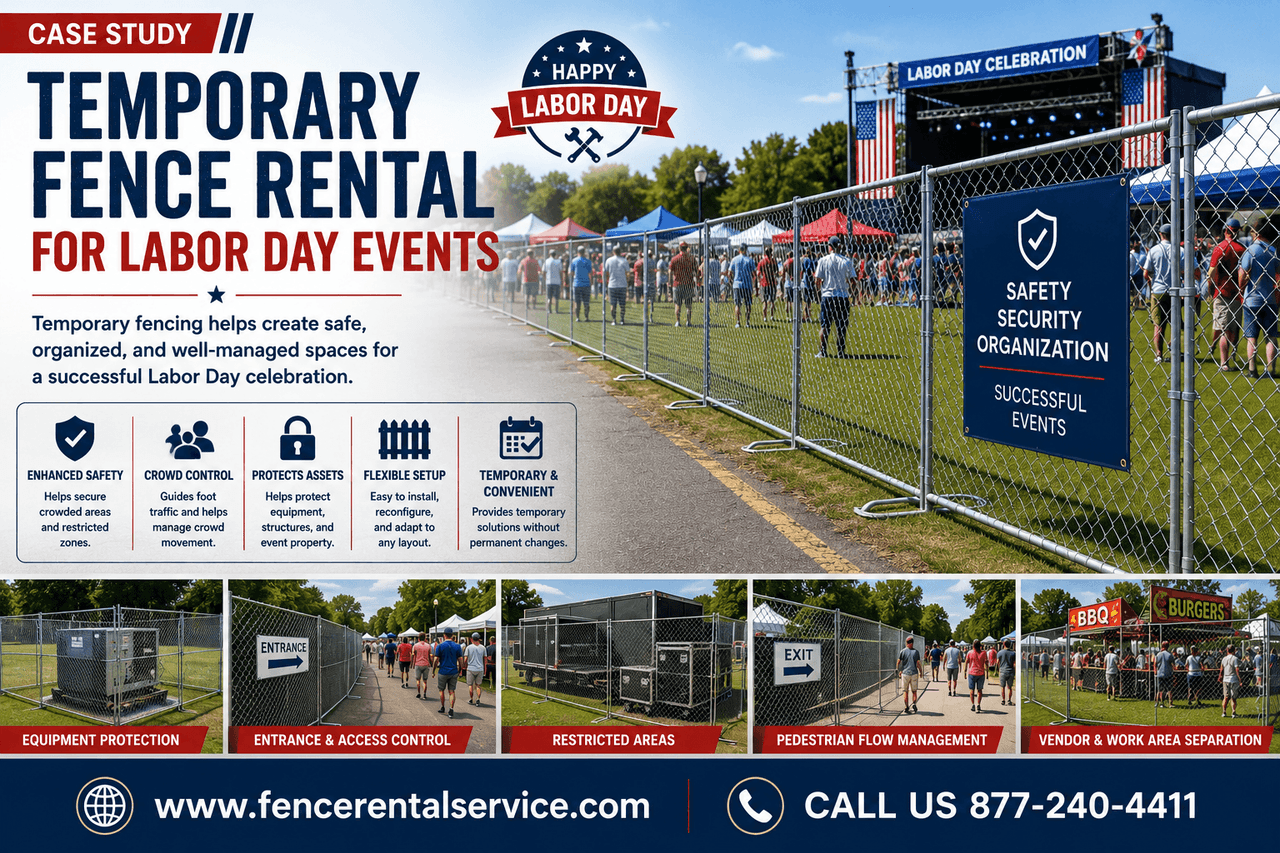
Labor Day celebrations often bring together large crowds for outdoor festivals, concerts, community gatherings, food events, and recreational activities. With increased attendance, event organizers must consider crowd movement, restricted areas, equipment protection, and overall site organization. A recent Labor Day event demonstrated the importance of temporary fence rental in creating a structured and organized outdoor environment.
The event was held at a large venue with multiple activity areas, food service locations, entertainment zones, staff sections, and temporary installations. Because visitors were expected throughout the day, organizers needed to separate public areas from restricted spaces while maintaining clear movement around the site.
Temporary fencing was incorporated into the event layout to establish defined boundaries. Fence sections were positioned around areas requiring controlled access, including equipment zones, service areas, temporary structures, and sections designated for event personnel. This helped distinguish public spaces from operational areas without creating permanent changes to the venue.
One important use of temporary fencing was crowd management. Clearly defined boundaries helped guide visitors toward designated entrances, exits, walkways, and activity areas. Organizers could create controlled pathways while limiting access to locations that were not intended for general visitors.
Temporary fencing also helped protect event equipment and support areas. Labor Day celebrations can involve stages, generators, storage areas, vendor equipment, and other temporary installations. Separating these locations from public areas helped reduce accidental interference and provided event staff with clearer control over operational spaces.
The fencing also supported site organization before and during the event. Installation could be arranged according to the venue's layout, allowing organizers to adjust boundaries based on anticipated crowd movement and event requirements. After the celebration, the temporary nature of the fencing allowed the site to return to its normal configuration.
The Labor Day case study highlights how temporary fencing can serve multiple purposes during large outdoor gatherings. It can help establish boundaries, organize pedestrian movement, protect restricted areas, and create a clearer distinction between public and operational spaces.
Effective event planning requires attention to details beyond entertainment and visitor services. Site security, crowd flow, equipment protection, and access control all contribute to maintaining an organized environment.
For Labor Day events, temporary fence rental can be an important component of site planning when organizers need flexible boundaries and controlled access without making permanent modifications to the venue.