
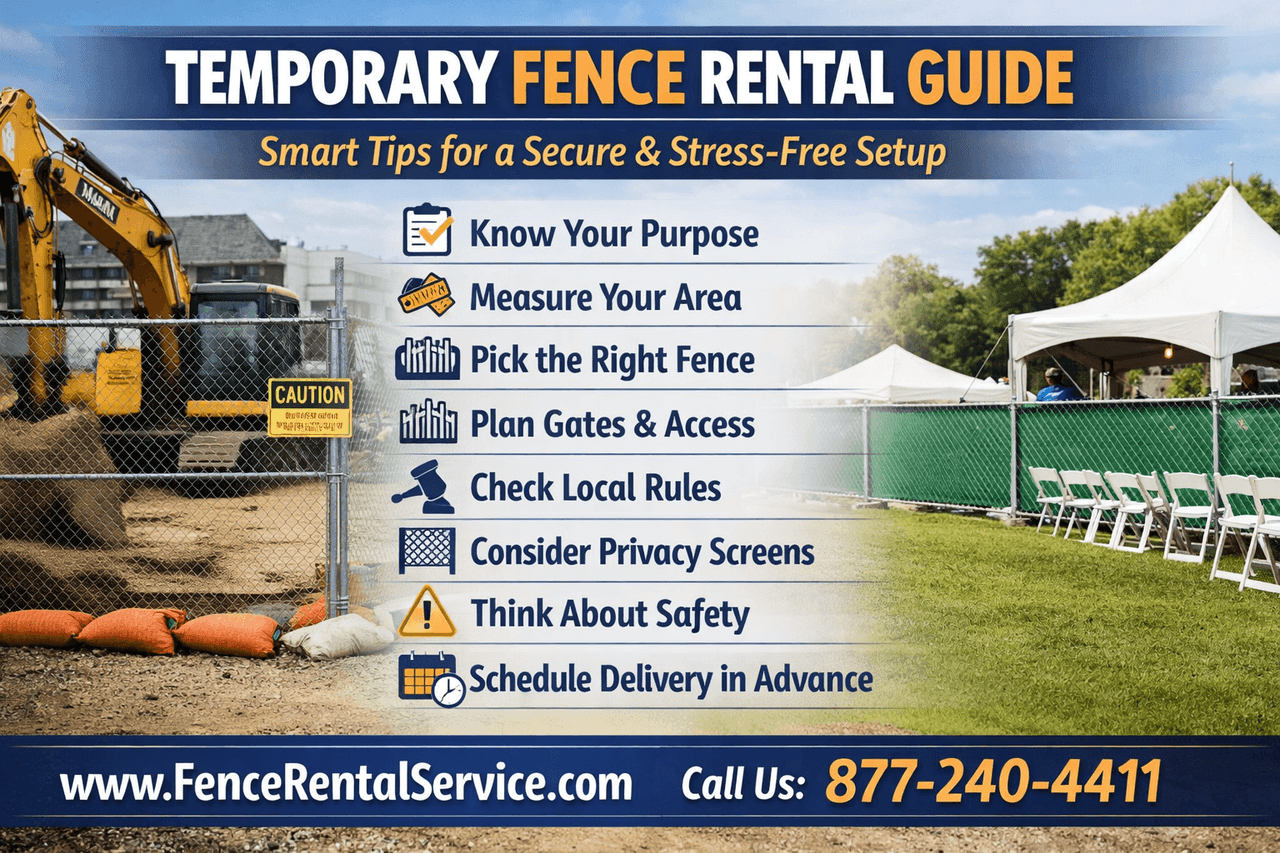
Planning a project or event that needs temporary fencing? Whether it’s a construction site, outdoor event, or property protection, renting the right fence can make a big difference. Here’s a practical, human-friendly guide to help you make the best choice without the stress.
1. Start with Your Purpose
Before choosing a fence, ask yourself why you need it. Is it for safety, crowd control, or privacy? Construction sites may need sturdy chain link fences, while events might benefit from cleaner-looking panel fences.
2. Measure Your Space Carefully
Always calculate the total linear feet (LF) required. Walk the area or use a site map. Ordering too little can delay your setup, while over-ordering adds unnecessary cost.
3. Choose the Right Fence Type
Temporary fencing comes in two popular options:
Panel fences (freestanding): Easy to install, ideal for short-term use
Post-driven fences: More secure, best for long-term projects or high-wind areas
4. Think About Ground Conditions
Soft soil works well for post-driven fences, while hard surfaces like concrete or asphalt are better suited for panel fences with weighted bases.
5. Don’t Forget Privacy Options
If your site needs discretion or protection from public view, consider adding privacy mesh. It also helps reduce dust and wind exposure.
6. Plan Entry & Exit Points
Think about how people or vehicles will access the site. Adding gates (swing or sliding) ensures smooth operations and better control.
7. Check Local Regulations
Some cities require permits for temporary fencing, especially for public events or construction. It’s always better to confirm in advance to avoid fines or delays.
8. Factor in Safety Requirements
Safety should always come first. Ensure the fencing is properly stabilized with sandbags or driven posts, especially in windy areas or crowded environments.
9. Understand Rental Duration
Rental pricing often depends on duration. Whether you need fencing for a few days or several months, clarify the rental terms and any extension charges upfront.
10. Ask About Installation & Removal
Professional installation can save time and ensure proper setup. Confirm if delivery, installation, and removal are included in your quote.
11. Inspect Equipment Quality
Clean, well-maintained fencing reflects professionalism and ensures safety. Don’t hesitate to ask about the condition of the materials being provided.
12. Plan for Weather Conditions
Wind, rain, and uneven terrain can impact fence stability. Discuss weather-resistant setup options with your provider if your site is exposed.
13. Coordinate Delivery Timing
Schedule delivery at least a day before your project or event starts. This gives enough buffer time for adjustments if needed.
14. Keep Communication Open
Provide a clear site contact person and phone number. Drivers often call for placement instructions, so staying reachable ensures smooth delivery.
15. Think About Future Needs
If your project may expand, plan for additional fencing in advance. It’s easier to scale up early than to make last-minute changes.
Final Thoughts
Temporary fence rental doesn’t have to be complicated. With the right planning and a reliable provider, you can secure your site efficiently and affordably. Focus on your needs, communicate clearly, and prioritize safety—and everything else will fall into place.
https://www.fencerentalservice.com/