
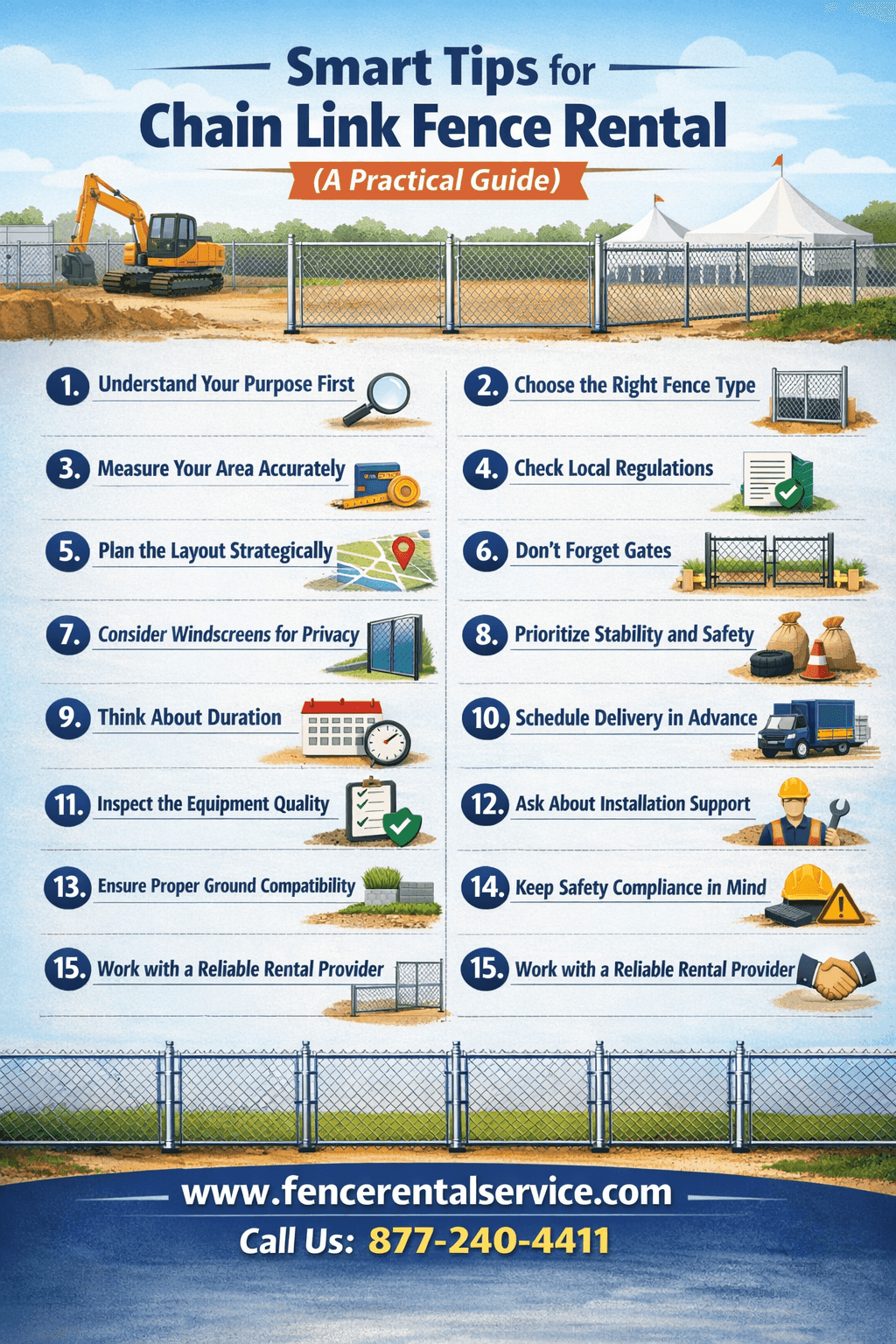
When planning a construction project, hosting an event, or securing a temporary space, choosing the right chain link fence rental can make all the difference. It’s not just about putting up a barrier—it’s about safety, convenience, and peace of mind. Here are 15 practical and easy-to-follow tips to help you get the most out of your fence rental experience.
1. Understand Your Purpose First
Before renting, define why you need the fence—construction safety, crowd control, or property security. This helps you choose the right type and setup.
2. Choose the Right Fence Type
Decide between post-driven fences (more secure and long-term) or panel fences (quick installation, no digging). Each serves a different purpose.
3. Measure Your Area Accurately
Incorrect measurements can lead to delays or extra costs. Walk the site and calculate the exact perimeter needed.
4. Check Local Regulations
Some cities or counties require permits for temporary fencing. Confirm rules beforehand to avoid unexpected fines or interruptions.
5. Plan the Layout Strategically
Think about entry points, emergency exits, and equipment access. A well-planned layout improves both safety and efficiency.
6. Don’t Forget Gates
Access is crucial. Make sure you include the right number of gates—single or double—based on your needs.
7. Consider Windscreens for Privacy
If your site is in a busy or public area, adding windscreens can improve privacy and give your site a more professional appearance.
8. Prioritize Stability and Safety
For panel fencing, ensure sandbags or weighted bases are included—especially in windy areas—to keep everything secure.
9. Think About Duration
Short-term and long-term rentals may have different pricing structures. Plan your timeline clearly to avoid extra charges.
10. Schedule Delivery in Advance
Booking early ensures availability and allows proper planning, especially during peak seasons or large-scale projects.
11. Inspect the Equipment Quality
Always ensure the panels are in good condition—no broken wires, rust, or weak frames. Quality fencing reflects professionalism.
12. Ask About Installation Support
Some providers include setup and dismantling services. This can save time and ensure the fence is installed correctly.
13. Ensure Proper Ground Compatibility
Different surfaces (grass, concrete, asphalt) require different installation methods. Make sure your provider is prepared for your site conditions.
14. Keep Safety Compliance in Mind
For construction sites, fencing must meet safety standards. Proper fencing helps protect workers, pedestrians, and your liability.
15. Work with a Reliable Rental Provider
Choose a company with experience, transparent pricing, and responsive customer service. A good provider makes the process smooth from start to finish.
Final Thoughts
Renting a chain link fence may seem simple, but a little planning goes a long way. By understanding your needs, choosing the right setup, and working with a trusted provider, you can ensure your site remains secure, organized, and professional.
If done right, a temporary fence doesn’t just protect your space—it supports your entire project’s success.