
Rent a Fence: Digging vs. No-Dig Fence Installation — Differences, Benefits, and Best Uses
Temporary fencing is commonly used at construction sites, outdoor events, commercial properties, and public gatherings. Two common installation methods are post-driven fencing, which involves penetrating the ground, and freestanding fencing, which uses weighted bases without digging. Understanding the differences helps project managers choose a suitable fence system for their site conditions and security requirements.
1. What Is Fence Installation With Digging?
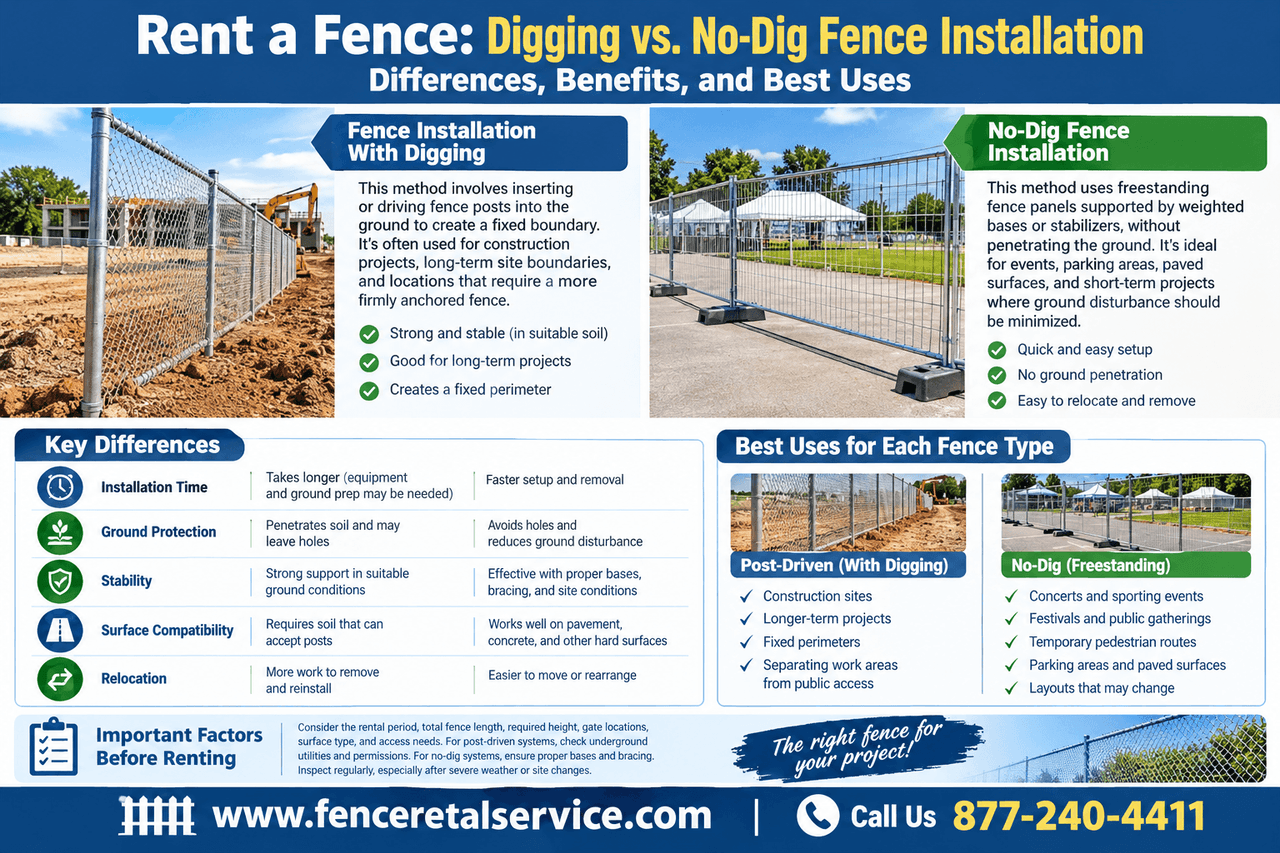
Fence installation with digging involves inserting or driving fence posts into the ground to create a fixed boundary. Depending on the fence system, posts may be driven directly into suitable soil or installed in prepared holes.
This method is often used for construction projects, long-term site boundaries, and locations that require a more firmly anchored fence. Properly installed posts can provide good stability, depending on soil conditions, fence height, wind exposure, and installation depth.
However, this approach requires checking underground utilities and obtaining any necessary permissions before ground penetration. Installation and removal may take longer, and the work can leave holes or disturb the surrounding soil.
2. What Is No-Dig Fence Installation?
No-dig fence installation uses freestanding fence panels supported by weighted bases, stabilizers, or other approved support systems. The panels create a temporary boundary without requiring posts to be driven into the ground.
This method is useful for outdoor events, festivals, parking areas, temporary work zones, and paved surfaces such as concrete or asphalt. It can also be suitable for short-term construction projects where ground disturbance should be minimized.
No-dig fencing is generally easier to relocate and remove. However, the system must be configured for the site's conditions. Wind, uneven surfaces, crowd pressure, and privacy screening can affect stability, so appropriate bases, bracing, and other safeguards are essential.
3. Key Differences Between the Two Methods
Installation time: No-dig panels can often be installed and removed more quickly. Post-driven fencing may require additional equipment and ground preparation.
Ground protection: No-dig systems generally avoid holes and reduce ground disturbance. Post-driven systems penetrate the soil and may leave holes after removal.
Stability: Properly installed post-driven fencing can provide strong support in suitable ground. No-dig fencing can also be effective when designed and secured for the site's specific conditions.
Surface compatibility: Post-driven fencing requires ground that can accept posts. No-dig systems are often more practical on pavement and other hard surfaces.
Relocation: Freestanding panels are generally easier to reposition, while driven posts usually require additional work to remove and reinstall.
4. Best Uses for Each Fence Type
Post-driven fencing is often considered for construction sites, longer-term projects, and fixed perimeters where ground conditions permit penetration. It can help separate work areas from public access and establish clear site boundaries.
No-dig fencing is commonly used for concerts, sporting events, festivals, temporary pedestrian routes, parking areas, and properties with paved surfaces. It is especially useful when the layout may change during the rental period.
Neither method is automatically best for every project. The correct choice depends on the intended purpose, duration, site layout, surface conditions, security needs, and applicable safety requirements.
5. Important Factors Before Renting a Fence
Before selecting a temporary fence, consider the rental period, total fence length, required height, gate locations, surface type, and access requirements. Determine whether the fence will need privacy screening, additional stabilization, or special arrangements for high-wind conditions.
For post-driven systems, confirm underground utility locations and ground-penetration permissions. For freestanding systems, ensure the supports and bracing are appropriate for the site. Both systems should be inspected regularly, particularly after severe weather or changes in site conditions.
Conclusion
Digging and no-dig fence installation offer different advantages for temporary fencing projects. Post-driven fencing may be appropriate for firmly established boundaries in suitable soil, while no-dig fencing provides flexibility and helps avoid ground penetration. Comparing site conditions, installation requirements, stability, and removal needs makes it easier to select a practical and safe fence rental solution.