
When you’re setting up a temporary fence—whether for a construction site, outdoor event, or crowd control—one thing matters above all: stability. A poorly secured fence can shift, fall, or even become a safety hazard in windy conditions or high-traffic areas.
The key to a reliable setup lies in understanding the surface you’re working with. Concrete, grass, and gravel each require different anchoring methods to ensure your fence stays firmly in place. Here’s a practical, easy-to-follow guide to help you secure your temporary fence with confidence.
Why Proper Fence Securing Matters
Temporary fencing is often used in dynamic environments. From construction zones to weddings and festivals, these fences need to withstand movement, weather, and constant use. Proper securing helps:
Prevent tipping or collapse
Ensure public safety
Maintain site boundaries
Protect equipment and restricted areas
Meet compliance and safety standards
No matter the location, investing a little extra time in securing your fence correctly can save you from costly issues later.
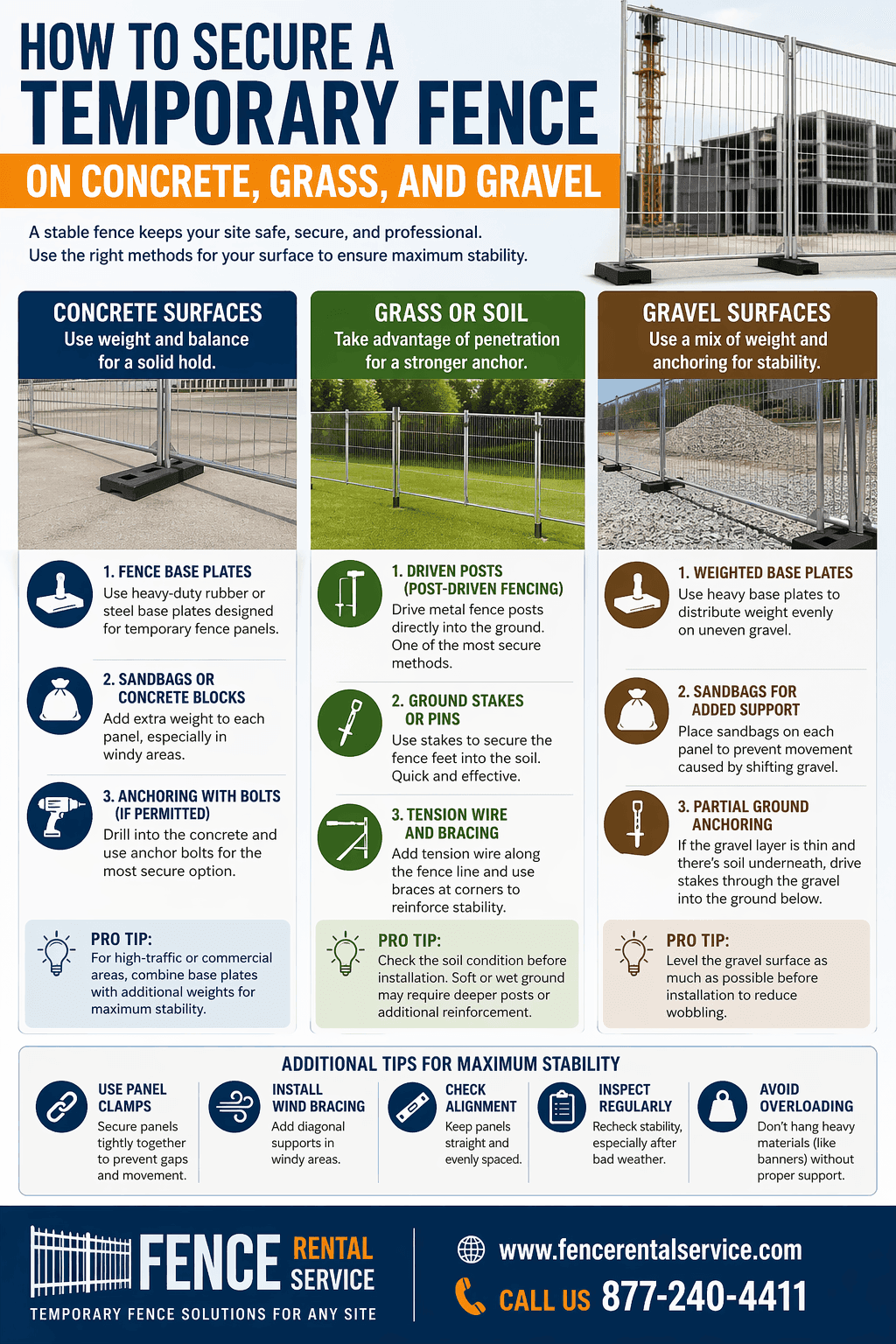
Securing Temporary Fence on Concrete Surfaces
Concrete surfaces—like sidewalks, parking lots, or driveways—don’t allow for digging, so your approach needs to rely on weight and balance.
Best Methods:
1. Fence Base Plates (Weighted Stands)
Use heavy-duty rubber or steel base plates designed specifically for temporary fence panels. These provide a stable foundation and are easy to install.
2. Sandbags or Concrete Blocks
Add extra weight to each panel by placing sandbags or concrete blocks on the base. This is especially important in windy areas.
3. Anchoring with Bolts (If Permitted)
In some cases, you can drill into the concrete and use anchor bolts to secure the fence feet. This is the most secure option but may require permission and professional tools.
Pro Tip:
For high-traffic or commercial areas, combine base plates with additional weights for maximum stability.
Securing Temporary Fence on Grass or Soil
Grass or soil surfaces give you the advantage of penetration, allowing for deeper anchoring.
Best Methods:
1. Driven Posts (Post-Driven Fencing)
Drive metal fence posts directly into the ground. This is one of the most secure methods, commonly used on construction sites.
2. Ground Stakes or Pins
Use stakes to secure the fence feet into the soil. These are quick to install and effective for short-term setups.
3. Tension Wire and Bracing
Add tension wire along the fence line and use braces at corners to reinforce stability.
Pro Tip:
Check the soil condition before installation. Soft or wet ground may require deeper posts or additional reinforcement.
Securing Temporary Fence on Gravel Surfaces
Gravel can be tricky—it’s not solid like concrete, nor compact like soil. It shifts under pressure, so stability requires a mix of weight and anchoring.
Best Methods:
1. Weighted Base Plates
Similar to concrete setups, use heavy base plates to distribute weight evenly.
2. Sandbags for Added Support
Place sandbags on each panel to prevent movement caused by uneven gravel surfaces.
3. Partial Ground Anchoring
If the gravel layer is thin and there’s soil underneath, you can drive stakes through the gravel into the ground below.
Pro Tip:
Level the gravel surface as much as possible before installation to reduce wobbling.
Additional Tips for Maximum Stability
Regardless of the surface, these best practices can make a big difference:
Use Panel Clamps: Secure panels tightly together to prevent gaps and movement
Install Wind Bracing: Add diagonal supports in windy areas
Check Alignment: Keep panels straight and evenly spaced
Inspect Regularly: Recheck stability, especially after bad weather
Avoid Overloading: Don’t hang heavy materials (like banners) without proper support
Choosing the Right Method for Your Project
Every project is different. A construction site may benefit from post-driven fencing, while an event setup on pavement may rely on weighted bases. The goal is always the same: a safe, secure, and reliable fence system.
If you’re unsure which method works best, it’s always wise to consult with professionals who understand site conditions and safety requirements.
Final Thoughts
Securing a temporary fence isn’t just about installation—it’s about ensuring safety, reliability, and peace of mind. By choosing the right method for concrete, grass, or gravel surfaces, you can create a setup that stands strong against time, weather, and daily use.
A well-secured fence reflects professionalism and care—qualities that matter whether you’re managing a job site or hosting an important event.