
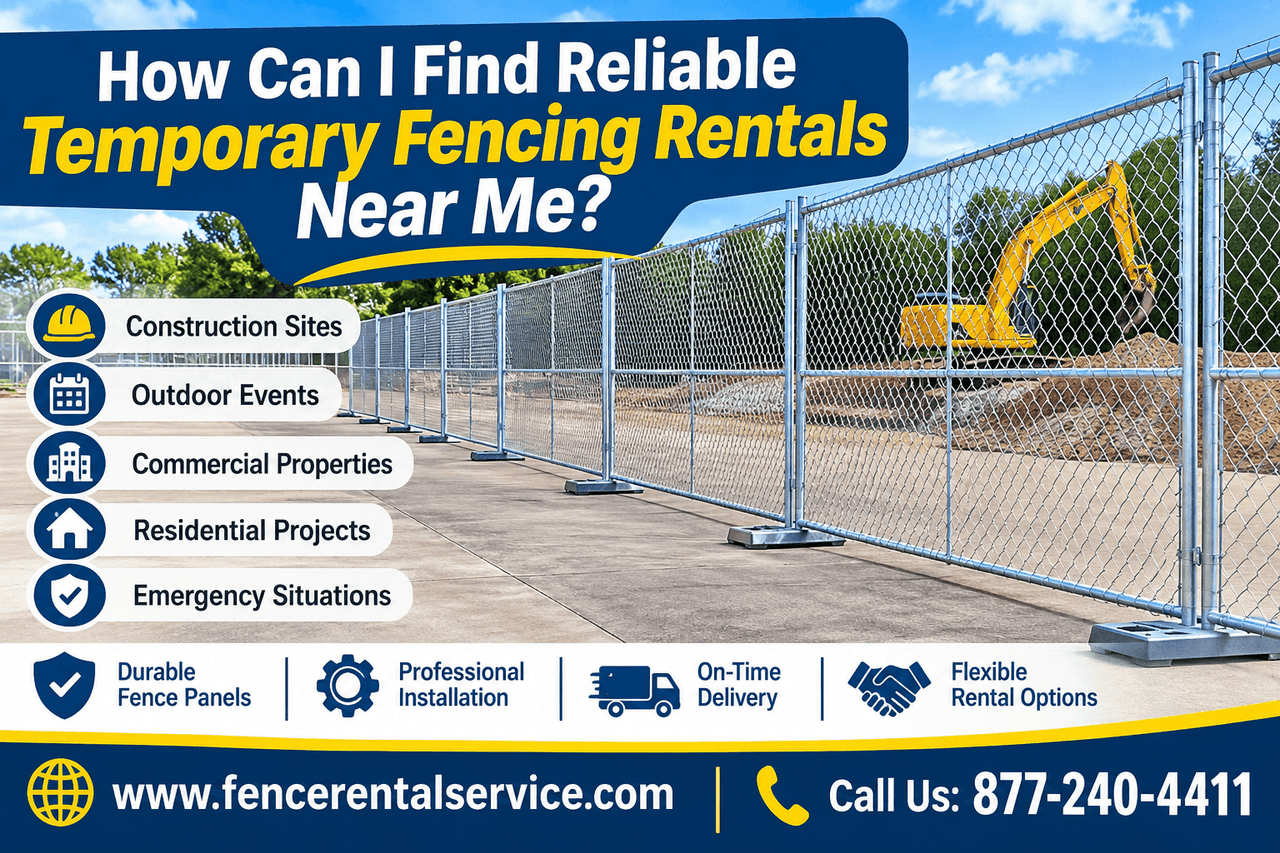
How Can I Find Reliable Temporary Fencing Rentals Near Me?
Finding reliable temporary fencing rentals near you requires more than comparing prices. Whether you are managing a construction project, organizing an outdoor event, securing a commercial property, or protecting a restricted area, choosing the right fencing provider is important for maintaining safety, security, and proper site organization.
Temporary fencing helps control access, prevent unauthorized entry, protect equipment, and establish clear boundaries. However, not every rental provider offers the same equipment quality, installation services, or rental flexibility.
Here are some important factors to consider when searching for dependable temporary fencing rentals.
1. Identify Your Temporary Fencing Requirements
Before contacting rental providers, determine why you need temporary fencing. Different projects require different fencing solutions.
Common applications include:
- Construction Sites: Secure work areas, restrict public access, and protect building materials and equipment.
- Outdoor Events: Establish event boundaries, manage pedestrian movement, and separate restricted areas.
- Commercial Properties: Control access to parking areas, storage spaces, and maintenance zones.
- Residential Projects: Protect renovation areas, landscaping projects, and temporary work zones.
- Emergency Situations: Create temporary barriers around damaged structures, hazardous areas, or restricted locations.
Understanding your requirements makes it easier to identify the appropriate fencing system.
2. Check the Quality of Rental Fence Panels
Fence quality is one of the most important considerations when selecting a temporary fencing rental provider.
Inspect the following features before making a decision:
- Strong metal frames and durable welded joints.
- Properly connected chain-link mesh.
- Stable support bases and fence feet.
- Rust-resistant materials suitable for outdoor conditions.
- Secure connecting clamps and accessories.
- Panels without significant bending or structural damage.
Damaged panels or unstable connections can create safety concerns, especially in areas with heavy pedestrian activity or changing weather conditions.
3. Compare Different Temporary Fencing Options
Temporary fencing comes in several configurations. Choosing the right option depends on the project's security requirements, ground conditions, and expected rental duration.
Chain-Link Temporary Fencing: Commonly used at construction sites, commercial properties, and outdoor events. It provides visibility while establishing a physical barrier.
Temporary Panel Fencing: Freestanding panels are useful when a project requires flexible installation and repositioning.
Privacy Screening: Privacy screens can be attached to suitable fence systems to reduce visibility into restricted work areas.
Temporary Fence Gates: Access gates allow authorized workers, delivery vehicles, and event personnel to enter and exit controlled areas.
4. Research Local Rental Providers
When searching online for temporary fencing rentals near you, review multiple providers rather than selecting the first result.
Consider checking:
- Customer reviews and ratings.
- Previous project experience.
- Equipment availability.
- Delivery and installation capabilities.
- Rental agreement conditions.
- Customer support and communication.
- Replacement procedures for damaged equipment.
Look for consistent feedback about equipment condition, installation quality, delivery coordination, and problem resolution.
5. Understand Installation and Ground Conditions
Proper installation is essential for temporary fence stability.
Before installation, evaluate the ground surface and surrounding environment.
For example:
- Concrete surfaces may require weighted support bases.
- Grass and soil areas may allow different stabilization methods.
- Uneven ground may require additional adjustments.
- Wind-exposed locations may need additional precautions.
- High-traffic areas require carefully positioned access points.
The installation method should match the site conditions and applicable safety requirements.
6. Confirm Rental Periods and Extension Policies
Project schedules sometimes change because of weather delays, construction problems, or unexpected work requirements.
Before renting temporary fencing, understand:
- Minimum rental periods.
- Weekly or monthly rental arrangements.
- Extension procedures.
- Early removal conditions.
- Pickup scheduling.
- Charges associated with extended rental periods.
Having clear rental terms helps prevent scheduling conflicts and unexpected expenses.
7. Evaluate Delivery and Installation Coordination
Timely delivery is important when temporary fencing is needed before construction begins or an event opens to the public.
Confirm the following details:
- Whether delivery is available in your location.
- Whether installation assistance is provided.
- How delivery dates are scheduled.
- Whether additional panels can be supplied.
- How removal and collection are coordinated.
Clear communication between the project manager and rental provider helps avoid unnecessary installation delays.
8. Ask Important Questions Before Renting
Before finalizing a temporary fencing rental, ask the provider a few practical questions:
Q1. How many fence panels will my project require?
The quantity depends on the total perimeter, panel dimensions, gate openings, and layout requirements.
Q2. Can temporary fencing be installed on concrete?
Yes. Suitable weighted bases and stabilization systems can be used on concrete surfaces.
Q3. Can I extend my temporary fence rental?
Many rental arrangements allow extensions, depending on equipment availability and contract conditions.
Q4. Is privacy screening available?
Some temporary fencing systems support privacy screening for construction sites and restricted areas.
Q5. What happens if a fence panel becomes damaged?
The procedure depends on the rental agreement. Damaged equipment should be reported promptly so that appropriate inspection, repair, or replacement can be arranged.
Finding reliable temporary fencing rentals near you involves evaluating equipment quality, installation methods, rental flexibility, customer feedback, and delivery coordination. Taking time to compare these factors can help prevent security problems, installation delays, and unnecessary project complications.
Whether the fencing is needed for construction, residential improvements, commercial properties, or special events, proper planning and selecting an appropriate fencing system can make temporary site protection safer and more organized.